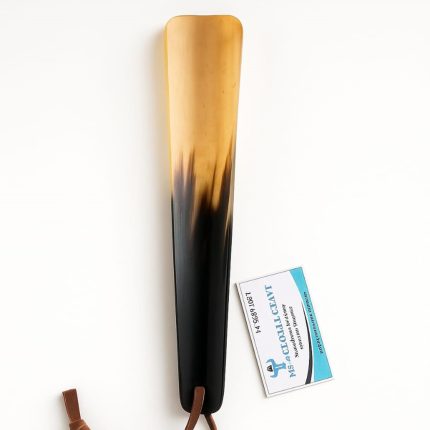


Shofar Horn
A shofar is an ancient musical instrument made from a hollowed-out ram’s horn, used in Jewish tradition, particularly for religious purposes on the High Holidays. It is characterized by its natural, curved shape and lacks valves or keys, meaning the player controls pitch by altering their embouchure, similar to a bugle. Its distinctive, resonant sound is produced by blowing across the mouthpiece at the narrow tip of the horn.
Description
Physical characteristics
- Material: Made from the horn of a kosher animal, most commonly a ram, but sometimes a goat or kudu.
- Shape: Naturally curved or spiraled, with no two shofars being exactly alike.
- Finish: Can be half-polished or fully polished, with the finish sometimes being a key factor in its sound.
- Mouthpiece: Created by cutting and shaping the narrow, pointed tip of the horn.
Sound and playing
- Sound: Produces a deep, clear, and resonant sound.
- Pitch control: The player’s lips control the pitch, with all pitch variation done by changing the embouchure, much like a bugle.
- Playing technique: Similar to blowing a trumpet, the player vibrates their lips to force air through a small hole in the mouthpiece.
Cultural and historical significance
- Religious use: Blown in synagogue services on holidays like Rosh Hashanah (Jewish New Year) and at the end of Yom Kippur.
- Symbolism: The ram’s horn is symbolic because a ram was sacrificed in the Akedah (Binding of Isaac) story.
- Purpose: Historically used to sound a warning or summons, its modern use serves as a “spiritual alarm clock” to awaken people to repentance and reflection during the High Holy Days